
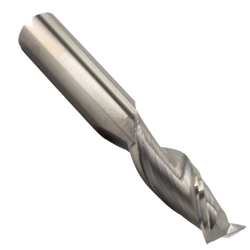
Carbide End Mills

Solid Carbide End Mills for CNC Milling and Precision Machining
Shop solid carbide end mills for CNC machining, metalworking, precision milling, toolmaking, and manufacturing applications. Carbide end mills offer excellent hardness, rigidity, and wear resistance, making them a popular choice for higher-speed machining, profiling, slotting, pocketing, roughing, and finishing.
Our selection includes single-end, double-end, square-end, ball-nose, corner-radius, roughing, high-helix, tapered, and specialty carbide end mills in fractional, metric, and decimal sizes.
Whether you are machining aluminum, steel, stainless steel, or other suitable materials, choosing the correct carbide end mill geometry and cutting conditions can improve productivity, dimensional accuracy, surface finish, and tool life.
Shop Carbide End Mills by Style
Select the carbide end mill configuration that best matches your machining operation, cutting diameter, and toolholding requirements.
Carbide Single End End Mills
Single-end carbide end mills feature cutting edges on one end and a shank on the opposite end. They are widely used for CNC milling, profiling, slotting, pocketing, and precision machining.
Our selection includes square-end, ball-nose, corner-radius, roughing, high-helix, tapered, and other specialized configurations. Single-end cutters are especially versatile when specific cutting lengths, geometries, or machining features are required.
Carbide Double End End Mills
Double-end carbide end mills feature cutting edges on both ends of the tool. When one end becomes worn, the cutter can be reversed to use the second end, provided it remains undamaged.
These cutters can offer excellent value for repetitive milling operations where both cutting ends can be used effectively. Proper toolholding and careful handling are especially important because carbide is relatively brittle.
Carbide Corner Rounding End Mills
Carbide corner rounding end mills are designed to create rounded edges and specified external radii on machined components.
These specialized cutters are useful for edge finishing, deburring, and machining consistent radii in production and precision metalworking applications.
Why Choose Solid Carbide End Mills?
Excellent Hardness and Wear Resistance
Solid carbide maintains high hardness under demanding cutting conditions and offers excellent resistance to abrasive wear. This makes carbide end mills particularly useful for production machining and applications requiring consistent cutting performance.
Higher Cutting Speed Capability
Compared with conventional high-speed steel, carbide generally supports higher cutting speeds when the machine, workholding, tool geometry, and workpiece material are suitable.
This can improve machining productivity and reduce cycle times in properly configured CNC operations.
High Rigidity and Reduced Deflection
Carbide has greater stiffness than HSS, helping reduce tool deflection during cutting. This can improve dimensional accuracy and surface finish, particularly during precision profiling and finishing operations.
Ideal for Rigid CNC Machining
Carbide end mills are particularly well suited for CNC milling machines with stable toolholding, secure workholding, and appropriate spindle capabilities.
Because carbide is more brittle than HSS, excessive vibration, runout, or interrupted cutting loads can increase the risk of chipping or breakage.
Carbide End Mill Cutting Shapes and Geometries
Different carbide end mill geometries are designed for specific machining operations. Choosing the correct cutting shape is just as important as selecting the tool material.
Square End Carbide End Mills
Square-end carbide end mills feature flat cutting ends and are commonly used for slots, flat-bottom pockets, shoulders, and general profiling.
They are among the most versatile carbide end mill designs for CNC machining and general metalworking.
Ball Nose Carbide End Mills
Ball-nose carbide end mills have rounded cutting tips designed for 3D contouring, curved surfaces, molds, dies, and complex profiles.
They are especially useful for precision finishing of contoured surfaces where a flat-end cutter would leave more pronounced steps.
Corner Radius Carbide End Mills
Corner-radius carbide end mills, also called bull-nose end mills, combine a generally flat cutting end with rounded cutting corners.
The radius strengthens the cutting edge and can help reduce corner chipping. These cutters are useful for profiling, pocketing, and machining specified internal corner radii.
Carbide Roughing End Mills
Carbide roughing end mills feature cutting geometry designed for efficient material removal. Many use serrated cutting edges to break chips into smaller segments and reduce cutting forces during roughing.
They are commonly used to remove substantial amounts of stock before a finishing pass.
High-Helix Carbide End Mills
High-helix carbide end mills use increased flute helix angles that can improve cutting action and chip evacuation in suitable materials.
They are commonly considered for aluminum and other applications where cutting geometry and efficient chip removal are important.
Tapered and Specialty Carbide End Mills
Tapered carbide end mills are designed for angled walls, tapered features, molds, dies, and specialized profiling applications.
Our single-end selection also includes straight-flute cutters, drill mills, and other specialty designs for specific machining requirements.
2-Flute vs. 3-Flute vs. 4-Flute Carbide End Mills
Flute count affects chip clearance, cutting-edge engagement, tool rigidity, and suitable feed rates.
2-Flute Carbide End Mills
2-flute carbide end mills generally offer generous chip clearance, making them a common choice for aluminum, softer materials, and slotting operations.
They are useful when efficient chip evacuation is a priority.
3-Flute Carbide End Mills
3-flute carbide end mills offer a balance between chip clearance and additional cutting edges. They are popular for aluminum machining and can support efficient material removal when paired with suitable geometry and cutting conditions.
4-Flute Carbide End Mills
4-flute carbide end mills are commonly used for steel, profiling, and finishing operations. Additional cutting edges can support productive machining, although chip clearance is generally more limited than with typical 2-flute designs.
Higher Flute Count Carbide End Mills
Carbide end mills with five or more flutes may be used for specialized finishing and high-efficiency milling, particularly where machine rigidity and chip evacuation are well controlled.
Which flute count is best? For aluminum, 2-flute or suitable 3-flute designs are common choices. For steel, 4-flute or higher-flute-count tools may be preferred depending on the operation. Always consider the specific tool geometry and workpiece material.
Single End vs. Double End Carbide End Mills
When to Choose Single End
Choose a single-end carbide end mill when you need a broader selection of cutting geometries, longer cutting lengths, specialized profiles, or greater reach.
Single-end cutters are widely used in CNC machining and are available in many configurations for roughing, finishing, and precision milling.
When to Choose Double End
Choose a double-end carbide end mill when the ability to use two cutting ends offers a cost advantage and the cutter configuration suits your application.
Double-end cutters are particularly useful for repetitive operations but require careful handling and secure toolholding to protect the unused cutting end.
What Materials Can Carbide End Mills Machine?
Aluminum and Nonferrous Metals
Carbide end mills are widely used for aluminum and other nonferrous materials. Sharp cutting geometries, appropriate flute counts, and effective chip evacuation help reduce material buildup and improve cutting performance.
Mild Steel and Carbon Steel
Carbide end mills offer excellent productivity in steel machining when suitable cutting speeds, feeds, and toolholding are used. They are popular for CNC profiling, pocketing, and production milling.
Stainless Steel
Carbide end mills can perform well in stainless steel, particularly when the tool geometry and cutting conditions are appropriate for the specific grade.
Stable cutting, proper feed rates, and heat management are important because stainless steel can work harden and generate substantial cutting heat.
Hardened and Abrasive Materials
Specialized carbide end mills are often selected for hardened steels and abrasive materials because of their hardness and wear resistance.
Not every carbide cutter is suitable for hardened materials. Always verify the manufacturer's recommended workpiece hardness and material range.
Uncoated vs. Coated Carbide End Mills
Uncoated Carbide End Mills
Uncoated carbide end mills provide excellent hardness and cutting performance without an additional surface coating. They are widely used for general-purpose machining and may be particularly suitable for certain aluminum applications when paired with the correct geometry.
Coated Carbide End Mills
Coated carbide end mills may use specialized coatings to improve wear resistance, reduce friction, or withstand elevated cutting temperatures.
Different coatings are optimized for different materials and applications. For example, some coatings are better suited for steel and high-temperature machining, while others are designed for nonferrous metals.
Which should you choose? Select the coating based on the workpiece material, machining operation, and manufacturer recommendations. An uncoated cutter may outperform an unsuitable coated cutter in certain applications.
Carbide vs. HSS vs. Cobalt End Mills
Carbide End Mills
Carbide offers high rigidity, hardness, and wear resistance. It is often preferred for rigid CNC machining, higher cutting speeds, and precision applications.
High-Speed Steel End Mills
HSS offers good toughness and economy. It is often a practical choice for manual milling, maintenance work, and less rigid machine setups.
Cobalt End Mills
Cobalt-alloy HSS offers improved hot hardness compared with conventional HSS while retaining relatively good toughness. It can be useful for tougher steels and demanding machining applications.
Which is best? Choose carbide when rigidity, cutting speed, and wear resistance are priorities. Choose HSS for economical general-purpose milling or cobalt when additional heat resistance is needed without moving to carbide.
Tips for Better Carbide End Mill Performance
Minimize Runout and Vibration
Use precision toolholders, secure workholding, and the shortest practical tool extension. Carbide is relatively brittle, and excessive runout or vibration can cause premature chipping or breakage.
Use Appropriate Speeds and Feeds
Match cutting speed, feed per tooth, depth of cut, and width of cut to the tool geometry, workpiece material, and machine capabilities. Avoid rubbing caused by excessively light feeds.
Maintain Effective Chip Evacuation
Prevent chips from accumulating in slots and pockets. Chip recutting can damage cutting edges, reduce surface quality, and shorten tool life.
Choose the Correct Tool Geometry
Use the appropriate flute count, helix angle, cutting length, and end geometry for the operation. Verify center-cutting capability before plunging directly into solid material.
Frequently Asked Questions About Carbide End Mills
What are carbide end mills used for?
Carbide end mills are used for CNC and manual milling operations including profiling, slotting, pocketing, roughing, finishing, and precision machining in suitable materials.
Are carbide end mills better than HSS?
Carbide offers greater rigidity, hardness, and higher-speed cutting capability, making it popular for CNC machining. HSS is generally tougher and more economical, which can make it preferable for less rigid setups.
Can carbide end mills cut stainless steel?
Yes. Suitable carbide end mills are commonly used for stainless steel machining. Choose the correct geometry and cutting conditions for the stainless steel grade.
What is the difference between square and ball nose carbide end mills?
Square-end mills are used for flat surfaces, slots, and pockets. Ball-nose end mills have rounded tips suited for curved surfaces and 3D contouring.
What is the difference between single-end and double-end carbide end mills?
Single-end cutters have cutting edges on one end, while double-end cutters have cutting edges on both ends. Double-end tools can provide additional value when both cutting ends are usable.
Should I choose a 2-flute or 4-flute carbide end mill?
Two-flute cutters generally provide greater chip clearance and are commonly used for aluminum and slotting. Four-flute cutters are often selected for steel, profiling, and finishing.
Why do carbide end mills break?
Common causes include excessive runout, vibration, improper speeds or feeds, poor chip evacuation, excessive tool overhang, and unsuitable cutting conditions. Secure toolholding and proper setup are especially important.
Watch: End Mills for Milling and Metalworking
Explore Our Solid Carbide End Mills
Learn more about end mills and the different cutting geometries used for CNC machining, profiling, slotting, roughing, and precision milling.
Explore our carbide single-end, double-end, and corner-rounding cutters, along with square-end, ball-nose, roughing, high-helix, and specialty milling tools.
Shop Carbide Single End End Mills