
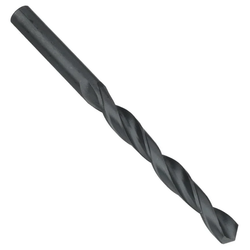
Left Hand Jobber Drills
Left Hand Reverse Drill Bits for Broken Bolt Removal and Reverse Drilling
Shop left hand drill bits from Qualtech for broken bolt removal, screw machine operations, and general-purpose reverse drilling. Unlike conventional right-hand drill bits, left-hand drills are designed to cut while rotating counterclockwise (in reverse).
These HSS left hand jobber drills feature a black oxide surface treatment, 118° conventional point, two-flute twist design, and round shank. They are suitable for drilling aluminum, brass, copper, mild steel, plastics, wood, and other machinable materials under appropriate cutting conditions.
Left-hand drill bits are particularly useful when attempting to remove broken bolts, stripped screws, and damaged right-hand-threaded fasteners. The reverse cutting direction can sometimes loosen and back out a fastener while drilling, potentially avoiding the need for a separate screw extractor.
Shop Left Hand Jobber Drills by Size
Choose from fractional, letter, and wire gauge sizes for reverse drilling, machining, and fastener removal applications.
Fractional Left Hand Drill Bits
Fractional left hand drill bits are available in common inch-based diameters and are useful for broken bolt removal, general machining, and reverse drilling.
These sizes are a practical starting point when selecting a drill diameter smaller than the damaged fastener being removed.
Letter Size Left Hand Drill Bits
Letter size left hand drills provide intermediate diameters for screw machine applications, precision drilling, and specialized holemaking.
They are useful when a particular drill diameter is required between common fractional sizes.
Wire Gauge Left Hand Drill Bits
Wire gauge left hand drills are identified by numbered sizes and provide a wide selection of smaller drill diameters.
They are especially useful for smaller fasteners, precision machining, and applications requiring specific numbered drill sizes.
What Is a Left Hand Drill Bit?
A left hand drill bit, also called a reverse drill bit, has cutting edges and flute geometry designed to remove material when the drill spindle rotates counterclockwise.
Conventional right-hand drill bits cut clockwise. Left-hand drills cut in the opposite direction, making them useful for both specialized machining and the removal of damaged fasteners with standard right-hand threads.
Counterclockwise Cutting Direction
The defining feature of a left-hand drill bit is its reverse cutting direction. To drill properly, the machine or drill must be set to reverse rotation.
Running a left-hand drill clockwise will not produce the intended cutting action and can damage the cutting edges or workpiece.
118° Conventional Drill Point
Qualtech left-hand jobber drills feature a 118° conventional point for general-purpose drilling.
For accurate hole placement, particularly when drilling into a broken bolt, use an appropriate center punch or starting method to reduce walking.
High-Speed Steel Construction
Manufactured from high-speed steel (HSS), these drills provide a practical combination of hardness, toughness, and cutting performance for general-purpose metalworking.
Black Oxide Surface Treatment
The black oxide finish provides a surface treatment that helps improve corrosion resistance and lubricant retention.
Black oxide is not a hard coating like titanium nitride. The drill's cutting performance primarily comes from its HSS construction and cutting geometry.
Round Shank and Jobber Length
The round shank fits compatible drill chucks and toolholding systems. The standard jobber-length design provides a useful balance of drilling reach and rigidity for general-purpose applications.
Using Left Hand Drill Bits to Remove Broken Bolts
One of the most popular uses for left hand drill bits is removing broken bolts, damaged screws, and seized fasteners with conventional right-hand threads.
Because the drill cuts counterclockwise, the drilling action may apply loosening torque to the fastener. In some cases, the broken bolt begins turning out before the hole is completely drilled.
Step 1: Prepare the Broken Fastener
Clean the exposed fastener area and apply a suitable penetrating lubricant when appropriate. Identify the center of the broken bolt and use a center punch to establish an accurate starting location.
Step 2: Select a Suitable Left Hand Drill Size
Choose a drill diameter smaller than the broken bolt's threaded diameter, leaving sufficient material between the drilled hole and the surrounding internal threads.
For larger fasteners, starting with a smaller pilot hole may help maintain alignment before increasing the drill diameter.
Step 3: Set the Drill to Reverse
Set the drill or machine spindle to counterclockwise rotation. Secure the workpiece, use a suitable low cutting speed, and maintain steady, controlled feed pressure.
Use appropriate eye protection and cutting fluid where recommended.
Step 4: Drill Carefully and Watch for Movement
Begin drilling into the center of the broken fastener. The reverse cutting action may cause the bolt to loosen and turn out of the threaded hole.
If the fastener begins rotating, stop drilling and remove it using an appropriate method rather than continuing unnecessarily.
Step 5: Use an Extractor if Necessary
If the broken fastener does not loosen, the drilled hole may be used with a properly sized screw extractor, following the extractor manufacturer's instructions.
Shop Spiral Flute Screw Extractors | Shop Screw Extractor and Drill Sets
Important: Left-hand drill bits do not guarantee successful bolt extraction. Severely corroded, cross-threaded, hardened, or tightly seized fasteners may require additional extraction methods. Avoid drilling into or damaging the surrounding internal threads.
Common Applications for Left Hand Drill Bits
Broken Bolt and Screw Removal
Left-hand drill bits are commonly used in automotive repair, equipment maintenance, machinery repair, and fabrication when attempting to remove broken right-hand-threaded fasteners.
Automatic Screw Machines
Left-hand drills are used in screw machine applications where the spindle rotates counterclockwise. The left-hand cutting geometry allows proper drilling under reverse spindle rotation.
Reverse Rotation Machining
Some machining operations and equipment configurations require counterclockwise cutting tools. Left-hand drills allow conventional drilling operations when the spindle direction is reversed.
General-Purpose Drilling
When operated in the correct direction, HSS left-hand drills can machine suitable metals, plastics, and wood using appropriate cutting speeds, feeds, and lubrication.
Left Hand vs. Right Hand Drill Bits
Left Hand Drill Bits
Cutting direction: Counterclockwise.
Typical applications: Broken bolt removal, reverse drilling, and screw machines with counterclockwise spindle rotation.
Left-hand drills may help loosen conventional right-hand-threaded fasteners while drilling.
Right Hand Drill Bits
Cutting direction: Clockwise.
Typical applications: Everyday drilling in metal, wood, plastic, and other suitable materials.
Right-hand drills are the standard configuration used in most general-purpose drilling operations.
Important distinction: A left-hand drill bit does not mean the drill is intended for left-hand-threaded fasteners. Its counterclockwise cutting action is particularly useful when attempting to loosen conventional right-hand-threaded bolts.
Left Hand Drill Bits vs. Screw Extractors
Although both tools can be used during broken fastener removal, they perform different functions.
Left Hand Drill Bits
A left-hand drill removes material from the broken fastener while rotating counterclockwise. The cutting action may also loosen the fastener, allowing it to back out during drilling.
Even when the bolt does not loosen, the drill can create a hole for a suitable screw extractor.
Screw Extractors
A screw extractor is designed to grip a damaged fastener and apply removal torque. Many extractors require a properly sized hole to be drilled before use.
Extractors do not perform the same cutting operation as a drill bit, and improper use can damage the fastener or surrounding threads.
Which should you use? A left-hand drill is often a useful first step because it may remove the fastener while drilling. If it does not, a correctly sized extractor may be used as the next step.
Tips for Better Left Hand Drilling Performance
Always Verify Reverse Rotation
Set the machine to counterclockwise rotation before drilling. A left-hand drill is not designed to cut in the normal clockwise direction.
Keep the Drill Centered
When removing a broken bolt, accurately center the drill to avoid damaging the surrounding threads. A center punch or suitable spotting method can help establish the starting location.
Use Appropriate Speeds and Cutting Fluid
Match cutting speed and feed pressure to the drill diameter and workpiece material. Suitable cutting fluid can help reduce heat and friction when drilling steel and other metals.
Avoid Excessive Force
Use steady, controlled pressure and maintain proper alignment. Excessive force or side loading can break the drill, particularly when working with smaller diameters or seized fasteners.
Frequently Asked Questions About Left Hand Drill Bits
What is a left hand drill bit?
A left-hand drill bit is designed to cut while rotating counterclockwise, opposite the direction of a conventional right-hand drill bit.
Can left hand drill bits remove broken bolts?
Yes. Left-hand drills are commonly used for broken bolt removal. Their counterclockwise cutting action may loosen a conventional right-hand-threaded fastener while drilling, although successful extraction is not guaranteed.
Which direction should a left hand drill bit turn?
A left-hand drill bit must rotate counterclockwise (reverse) to cut properly.
Are left hand drill bits the same as screw extractors?
No. A left-hand drill removes material and may loosen a fastener during drilling. A screw extractor is designed to grip a damaged fastener and apply removal torque.
What size left hand drill bit should I use for a broken bolt?
Choose a drill smaller than the fastener's threaded diameter and follow the appropriate extraction procedure. The correct size depends on the bolt diameter, available access, and whether a screw extractor will be used.
Can left hand drill bits drill metal?
Yes. These HSS left-hand jobber drills are suitable for general-purpose drilling in mild steel, aluminum, brass, copper, and other machinable materials when operated counterclockwise under appropriate cutting conditions.
Do left hand drill bits work on left-hand-threaded bolts?
They can drill suitable fastener material, but their counterclockwise cutting action does not provide the same loosening advantage for a left-hand-threaded bolt. Left-hand threads generally loosen clockwise.
What sizes are available?
Our Qualtech left-hand jobber drill bits are available in fractional, letter, and wire gauge sizes.
Watch: Black Oxide HSS Drill Bits
Understanding Black Oxide Drill Bits
Learn about black oxide surface treatment and the benefits of high-speed steel drill bits for general-purpose metalworking.
Our Qualtech left-hand jobber drills combine HSS construction with a black oxide finish and counterclockwise cutting geometry for reverse drilling applications.
Explore our complete selection of left-hand drills in fractional, letter, and wire gauge sizes.
Shop Fractional Left Hand Drills