
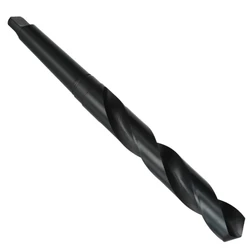
Taper Shank Drills
Taper Shank Drill Bits – Morse Taper Drills for Industrial Drilling
Shop taper shank drill bits designed for drill presses, lathes, milling machines, and heavy-duty industrial drilling equipment. Unlike conventional straight shank drills, taper shank drill bits feature a precision-machined Morse taper connection that fits into a compatible machine spindle, sleeve, or adapter.
The Morse taper design provides a secure, self-holding connection that helps transmit drilling torque while maintaining tool alignment. This makes taper shank drills particularly useful for larger diameter holes, production drilling, metal fabrication, and machine shop applications.
Our taper shank drill selection includes high-speed steel (HSS) and cobalt drills in a variety of diameters and Morse taper sizes. Understanding the differences between MT1, MT2, MT3, MT4, and larger taper sizes is essential when selecting the correct drill for your equipment.
Shop Taper Shank Drill Bits by Material
Choose the cutting tool material that best matches your workpiece, drilling conditions, and production requirements.
HSS Taper Shank Drill Bits
High-speed steel taper shank drills provide dependable general-purpose performance for carbon steel, mild steel, aluminum, brass, and other compatible materials. An economical choice for maintenance, fabrication, and everyday machine shop drilling.
Cobalt Taper Shank Drill Bits
Cobalt-alloyed HSS taper shank drills provide improved heat resistance and cutting-edge durability for stainless steel, alloy steel, and other difficult-to-machine metals.
What Is a Taper Shank Drill Bit?
A taper shank drill bit is a twist drill with a conical shank designed to fit into a matching tapered machine socket. Most industrial taper shank drills use the Morse taper system, which provides standardized taper dimensions for different machine and tool sizes.
Instead of being gripped by the jaws of a conventional drill chuck, a Morse taper drill is inserted directly into a matching spindle or compatible taper sleeve. The accurately machined mating surfaces create a frictional connection that holds the drill in position during normal drilling operations.
Direct Spindle Mounting
A taper shank drill can fit directly into a machine spindle with the correct Morse taper socket, eliminating the need for a conventional three-jaw drill chuck.
Self-Holding Taper Connection
Morse tapers use a shallow taper angle that allows the mating surfaces to grip through friction. Proper seating helps maintain a secure connection under suitable axial drilling loads.
Accurate Tool Alignment
A clean, undamaged taper connection helps position the drill concentrically with the machine spindle, supporting accurate hole-making.
Designed for Industrial Equipment
Taper shank drills are commonly used on drill presses, radial drilling machines, lathes, milling machines, and other equipment with Morse taper spindle connections.
How Does a Morse Taper Drill Shank Work?
A Morse taper, commonly abbreviated MT, is a standardized conical connection between a cutting tool and its holder. The drill shank and machine socket have matching tapered surfaces that seat together to create a frictional grip.
1. Insert the Drill
The taper shank is inserted into a clean, matching Morse taper socket in the machine spindle or adapter.
2. Seat the Taper
Proper seating creates close contact between the mating surfaces. During drilling, axial cutting forces generally help maintain the connection.
3. Transmit Drilling Torque
The taper's frictional grip transmits torque during operation. On tang-style taper shank drills, the tang also serves as a feature for removal and may provide secondary torque support in compatible sockets.
4. Remove the Drill
Many tang-style Morse taper tools are removed using a drift key inserted through the machine spindle's removal slot. Always follow the machine manufacturer's removal procedure.
Because the connection relies on accurately mating surfaces, the taper and socket should be clean and free from chips, burrs, and damage before installation.
Morse Taper Sizes Explained: MT1, MT2, MT3, MT4, MT5 and MT6
Morse taper sizes are identified by numbers. As the MT number increases, the taper generally becomes larger and is intended for equipment with a correspondingly larger spindle connection.
The Morse taper number identifies the shank connection size, not the cutting diameter of the drill bit. A 1-inch drill, for example, may have a different Morse taper size depending on its design.
MT1 – Morse Taper #1
MT1 is a relatively small Morse taper connection commonly associated with smaller machine tools and light-duty drilling equipment.
MT2 – Morse Taper #2
MT2 is commonly found on drill presses, smaller lathes, and general-purpose machine shop equipment. It is widely used for a range of industrial drilling applications.
MT3 – Morse Taper #3
MT3 provides a larger taper connection for medium-duty and heavier drilling equipment. It is commonly used with larger diameter drills and machines designed for greater drilling loads.
MT4 – Morse Taper #4
MT4 is commonly associated with larger industrial drill presses, radial drills, and heavier machine tools.
MT5 – Morse Taper #5
MT5 is a larger Morse taper connection used in heavy industrial machining equipment and applications requiring substantial toolholding capacity.
MT6 – Morse Taper #6
MT6 is among the larger standard Morse taper sizes and is associated with heavy-duty industrial machinery and large toolholding systems.
Are Different Morse Taper Sizes Interchangeable?
No. An MT2 drill does not fit directly into an MT3 socket without an appropriate reducing sleeve. Likewise, a larger taper cannot be inserted directly into a smaller socket. Always verify the machine spindle size and use a properly rated adapter when necessary.
Morse Taper Size Reference Chart
The following chart provides approximate large-end taper diameters for common Morse taper sizes. These are connection dimensions, not drill cutting diameters.
| Taper | Large-End Diameter (Approx.) | Typical Equipment Class |
|---|---|---|
| MT1 | 0.475" | Small machine tools |
| MT2 | 0.700" | General-purpose drill presses |
| MT3 | 0.938" | Medium-duty machine tools |
| MT4 | 1.231" | Larger industrial machines |
| MT5 | 1.748" | Heavy industrial equipment |
| MT6 | 2.494" | Large industrial machines |
These dimensions are approximate reference values. Actual Morse taper geometry includes specific diameters, lengths, and taper angles. Consult the applicable dimensional standard or machine documentation when verifying compatibility.
Why Use a Taper Shank Drill Instead of a Straight Shank Drill?
Suitable for Larger Diameter Drilling
Taper shank drills are widely used for larger holes where the machine and cutting tool must handle significant drilling torque and axial thrust.
Direct Machine Spindle Connection
A matching Morse taper connection allows the drill to mount directly into the spindle without a conventional drill chuck.
Reduced Toolholding Components
Direct mounting eliminates the additional chuck assembly, which can reduce unnecessary tool overhang in suitable setups.
Industrial Toolholding Standard
Morse taper connections are widely used across drill presses, lathes, and industrial machine tools, allowing compatible tooling and adapters to be selected according to standardized dimensions.
Reliable Tool Positioning
Properly maintained tapered surfaces help provide repeatable seating and alignment during drilling operations.
HSS vs. Cobalt Taper Shank Drill Bits
The Morse taper determines how the drill mounts to the machine. The cutting tool material determines how the drill performs in different workpiece materials and cutting conditions.
HSS Taper Shank Drills – General-Purpose Drilling
High-speed steel offers a practical balance of toughness, wear resistance, and affordability. It is commonly used for drilling mild steel, carbon steel, aluminum, brass, and other general-purpose materials.
Many HSS taper shank drills feature a black oxide finish and a conventional 118-degree point, although specifications vary by product.
Cobalt Taper Shank Drills – Stainless Steel and Tough Alloys
Cobalt taper shank drills are manufactured from cobalt-alloyed high-speed steel. Cobalt improves hot hardness and wear resistance, making these drills suitable for many demanding metalworking applications.
M35 cobalt contains 5% cobalt and offers improved cutting performance at elevated temperatures. Certain cobalt taper shank drills feature 135-degree split points, depending on the specific product.
Which Taper Shank Drill Material Should You Choose?
Choose HSS for economical general-purpose drilling in mild steel, carbon steel, aluminum, and other common materials. Choose cobalt when drilling stainless steel, alloy steel, and tougher materials where improved hot hardness and wear resistance are beneficial.
Morse Taper Sleeves, Adapters and Drill Removal
Morse taper accessories allow machine shops to use different compatible tool sizes and safely remove taper-mounted cutting tools.
Morse Taper Reducing Sleeves
A reducing sleeve allows a smaller Morse taper tool to fit into a larger Morse taper machine socket. For example, an appropriate MT2-to-MT3 sleeve allows an MT2 tool to be used in an MT3 spindle.
Morse Taper Extensions
Specialized extensions can increase the reach of compatible Morse taper tooling. Additional overhang may reduce rigidity, so extensions should be selected carefully.
Drift Keys
Drift keys are commonly used to remove tang-style Morse taper tools from compatible machine spindles and sleeves. They release the taper connection through the designated removal slot.
Keeping Taper Connections Clean
Chips, oil contamination, burrs, and damaged taper surfaces can interfere with proper seating. Inspect and clean the taper and socket before installing a drill.
Taper Shank Drills vs. Taper Length Drills
Taper shank and taper length are different drill bit characteristics, even though their names are similar.
Taper Shank Drill Bits
A taper shank drill has a conical mounting shank, commonly using a Morse taper connection. The term describes how the drill attaches to the machine.
Taper Length Drill Bits
A taper length drill refers to a standardized longer drill length with greater reach than a typical jobber drill. Taper length drills commonly feature straight shanks and do not necessarily have a Morse taper connection.
Which One Do You Need?
Choose taper shank drills when your equipment requires a Morse taper connection. Choose taper length drills when additional drilling reach is required and the drill's shank style is compatible with your toolholder.
Common Applications for Morse Taper Drill Bits
Industrial Drill Presses
General-purpose and large-diameter drilling using drill presses equipped with Morse taper spindles.
Radial Drilling Machines
Drilling larger workpieces and heavy industrial components using rigid radial drill equipment.
Lathe Operations
Drilling workpieces held in a lathe using compatible Morse taper tooling mounted in the tailstock or other suitable toolholding arrangement.
Metal Fabrication
Drilling structural components, machinery parts, steel plates, and fabricated assemblies.
Machine Shops
Production and maintenance drilling involving larger diameters, various metal alloys, and machine-mounted cutting tools.
Industrial Equipment Maintenance
Repair and modification of machine components using appropriate taper-mounted drilling equipment.
How to Choose the Right Taper Shank Drill Bit
1. Identify Your Machine's Morse Taper Size
Check the spindle or toolholder specifications to determine whether your machine uses MT1, MT2, MT3, MT4, or another taper size.
2. Select the Drill Diameter
Choose the cutting diameter required for the hole. Remember that drill diameter and Morse taper shank size are separate measurements.
3. Choose HSS or Cobalt
Select HSS for general-purpose metal drilling or cobalt for demanding alloys where additional hot hardness and wear resistance are useful.
4. Confirm Flute Length and Hole Depth
Ensure the drill has sufficient flute length and chip clearance for the intended hole depth.
5. Check Point Geometry
Review whether the drill features a conventional 118-degree point, a 135-degree split point, or another geometry appropriate for the material.
6. Verify Machine Capacity
Confirm that the machine has the spindle capacity, power, speed range, and rigidity needed for the selected drill diameter and workpiece material.
Frequently Asked Questions About Taper Shank Drill Bits
What is a taper shank drill bit?
A taper shank drill is a twist drill with a conical shank designed to fit into a matching tapered machine spindle or adapter.
What does MT mean on a drill bit?
MT stands for Morse Taper, a standardized taper connection used on many machine tools and industrial drill bits.
What is the difference between MT1, MT2 and MT3?
These designations identify different Morse taper sizes. MT1 is smaller than MT2, and MT2 is smaller than MT3. Each requires a matching spindle socket or compatible adapter.
How do I know which Morse taper size I need?
Check the machine manual, spindle marking, or existing tool specifications. The Morse taper size must match the machine socket or adapter.
Can I use an MT2 drill in an MT3 machine?
Yes, with an appropriate MT2-to-MT3 reducing sleeve. The drill will not fit directly without the correct adapter.
Can an MT3 drill fit into an MT2 spindle?
Not directly. An MT3 shank is larger than an MT2 socket. Specialized equipment or an appropriately rated external adapter arrangement would be required.
Why do large drill bits use taper shanks?
Morse taper connections provide a practical industrial toolholding system for drills that generate significant torque and axial thrust.
Do Morse taper drills require a drill chuck?
No. A correctly sized Morse taper drill can mount directly into a matching machine spindle or compatible taper sleeve.
How does a Morse taper stay in place?
The shallow tapered surfaces create a frictional grip when properly seated. Normal axial drilling forces generally help maintain that connection.
What is the tang on a Morse taper drill?
The tang is a flattened feature at the end of many Morse taper shanks. It is commonly used with a drift key for tool removal and may provide secondary torque support.
How do you remove a taper shank drill?
Many tang-style taper shank drills are removed with a drift key through the spindle's removal slot. Follow the machine manufacturer's procedure.
What is the difference between taper shank and straight shank drills?
Taper shank drills fit matching tapered sockets, while straight shank drills are generally held in compatible drill chucks or collets.
Are taper shank drills the same as taper length drills?
No. Taper shank refers to the mounting connection. Taper length refers to a longer drill length classification.
Are HSS taper shank drills good for steel?
Yes. HSS taper shank drills are commonly used for drilling mild steel, carbon steel, and other compatible metals.
Are cobalt taper shank drills better for stainless steel?
Cobalt-alloyed HSS provides improved hot hardness and wear resistance, making it a common choice for stainless steel and demanding alloy drilling.
Can taper shank drills be used in a lathe?
Yes. Taper shank drills can be used in compatible lathe tailstocks and toolholding systems when the taper size and machine capacity are appropriate.
Can I use a taper shank drill in a handheld drill?
Taper shank drills are primarily designed for compatible machine-mounted toolholding systems rather than conventional handheld drill chucks.
Does the Morse taper size determine the drill diameter?
No. Morse taper size describes the shank connection. Drill diameter describes the size of the hole the cutting edges produce.
What happens if a Morse taper is dirty or damaged?
Contamination or damage can prevent proper seating, reduce the frictional grip, and cause alignment or toolholding problems.
Shop Taper Shank Drills and Related Resources
Browse our selection of Morse taper drill bits to find the appropriate cutting diameter, shank size, and cutting tool material for your machine shop or industrial drilling application.
Learn More About HSS and Cobalt Drill Bits
Watch our Drill America videos to learn more about high-speed steel and cobalt drill bit materials, their cutting characteristics, and how to choose the right drill for different metalworking applications.
High-Speed Steel (HSS) Drill Bits
High-speed steel drill bits provide versatile, dependable cutting performance for general-purpose metal drilling. HSS taper shank drills combine this cutting tool material with a Morse taper connection for use in compatible industrial drilling equipment.
HSS is a practical choice for mild steel, carbon steel, aluminum, brass, and many routine machining applications.
Cobalt Drill Bits
Cobalt-alloyed high-speed steel provides improved hot hardness and wear resistance compared with conventional HSS. These characteristics make cobalt taper shank drills useful for stainless steel, alloy steel, and other demanding metalworking applications.
Choosing between HSS and cobalt depends on the workpiece material, cutting conditions, and performance requirements. Both are available in taper shank configurations for compatible industrial machinery.