
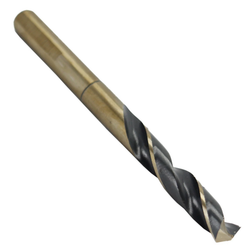
3/8" Reduced Shank Drills
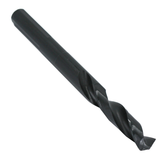
3/8" Reduced Shank Drill Bits – HSS, Black & Gold and Cobalt
Shop 3/8" reduced shank drill bits from Drill America and Qualtech for drilling larger diameter holes with compatible 3/8" drill chucks. A reduced shank drill features a cutting diameter larger than its shank diameter, allowing larger drill bits to fit smaller-capacity chucks.
Our 3/8" reduced shank drills are a popular choice for general-purpose metalworking, fabrication, equipment maintenance, and repair work. They provide a convenient way to use larger cutting diameters without requiring a 1/2" drill chuck, provided the equipment has sufficient power and rigidity.
Choose from high-speed steel (HSS), premium KFD black-and-gold HSS, and cobalt reduced shank drills. Start by selecting the drill material and cutting diameter that best match your application.
Shop 3/8" Reduced Shank Drills by Type
Our 3/8" reduced shank drill selection includes three main categories. Each offers different characteristics for general-purpose drilling, metalworking, and more demanding materials.
3/8" HSS Reduced Shank Drills – General Purpose
High-speed steel reduced shank drills provide a practical combination of toughness, versatility, and affordability. They are commonly used for drilling mild steel, aluminum, brass, and other machinable materials.
These drills are a dependable choice for maintenance departments, contractors, fabrication shops, and customers who need larger cutting diameters with a 3/8" shank.
For everyday drilling where economy and general-purpose performance are priorities, standard HSS is often a good starting point.
3/8" KFD Black & Gold HSS Reduced Shank Drills
Our KFD black-and-gold reduced shank drills offer a premium HSS option for customers looking for dependable metalworking performance.
The black-and-gold surface treatment provides a distinctive finish, while the individual drill specifications determine the point geometry and cutting characteristics.
These drills are a useful option for fabrication, industrial maintenance, and general metal drilling where a premium HSS drill is preferred.
3/8" Cobalt Reduced Shank Drills – Tougher Metals
Cobalt reduced shank drills are manufactured from cobalt-alloy high-speed steel, which provides improved hot hardness compared with standard HSS.
This makes cobalt drills particularly useful for stainless steel, alloy steels, and other tougher metals that generate greater cutting heat.
For customers regularly drilling demanding materials, cobalt reduced shank drills may provide better performance and tool life under suitable cutting conditions.
What Is a 3/8" Reduced Shank Drill Bit?
A 3/8" reduced shank drill bit has a cutting diameter larger than 3/8" but a shank designed to fit a compatible 3/8" drill chuck.
For example, a 1/2" diameter drill with a 3/8" reduced shank can produce a nominal 1/2" hole while fitting a 3/8" capacity chuck.
Cutting Diameter vs. Shank Diameter
The cutting diameter determines the approximate hole size produced by the drill. The shank diameter determines the toolholding size required.
For example, a drill with a 5/8" cutting diameter and a 3/8" reduced shank is intended to drill a nominal 5/8" hole while fitting a compatible 3/8" chuck.
Always check both measurements before ordering, as the cutting diameter and shank diameter serve different purposes.
Why Choose a 3/8" Reduced Shank?
Many portable drills and other drilling tools use 3/8" capacity chucks. A reduced shank allows these tools to accommodate larger drill bit diameters without requiring a larger chuck opening.
This can be especially convenient for maintenance, repair, fabrication, and general-purpose drilling where the available equipment has a 3/8" chuck.
However, the reduced shank does not increase the machine's available torque or power. Always verify that the equipment is suitable for the intended cutting diameter and material.
Round Shanks vs. Three-Flat Shanks
Reduced shank drills may feature round or three-flat shanks, depending on the product series.
A three-flat shank has three ground flat surfaces designed to improve grip in compatible drill chucks and help reduce slipping.
Because larger cutting diameters can generate substantial torque, secure toolholding is especially important. Review the individual product specifications to confirm the shank design.
HSS vs. Cobalt 3/8" Reduced Shank Drills
Choosing the correct cutting tool material can improve drilling performance, reduce tool wear, and help control costs. High-speed steel and cobalt-alloy HSS are both widely used for metalworking, but they have different strengths.
High-Speed Steel (HSS) – Economical and Versatile
HSS provides a useful combination of cutting hardness, toughness, and affordability. It is commonly selected for drilling mild steel, aluminum, brass, plastics, and other machinable materials.
For routine drilling and general maintenance, HSS reduced shank drills are often the most economical option.
Cobalt – Improved Performance in Tougher Metals
Cobalt-alloy HSS offers improved hot hardness, helping the cutting edges retain hardness at elevated temperatures.
Cobalt drills are often preferred for stainless steel, alloy steels, and other materials that are more difficult to machine.
They generally cost more than standard HSS drills but can be a worthwhile choice for repeated drilling in demanding materials.
Which Material Should You Choose?
For general-purpose drilling in mild steel and other common materials, start with HSS. For stainless steel and tougher alloys, consider cobalt.
The best choice also depends on the specific drill geometry, cutting diameter, machine rigidity, feed rate, and cutting speed.
Drill Point Geometry and Surface Finishes
In addition to cutting tool material, drill point geometry and surface finish can affect how a reduced shank drill performs. Always review the specifications of the individual drill bit before selecting it for your application.
118° Conventional Drill Points
A 118° conventional point is a traditional general-purpose drill geometry. It is commonly used for drilling mild steel and other machinable materials.
Conventional-point drills may walk when starting on smooth metal surfaces, so center punching or spot drilling can help improve starting accuracy.
135° Split-Point Drill Bits
A 135° split point has a flatter tip angle and modified center geometry that can help reduce walking and starting thrust.
Split-point drills are useful when accurate hole placement is important, particularly in metalworking applications.
Point geometry varies by drill series, so check the product description rather than assuming every reduced shank drill uses the same point.
Black Oxide Finish
Black oxide is a common surface treatment on HSS drill bits. It provides some corrosion resistance and can help with cutting-fluid retention.
Black oxide drills are frequently selected for economical general-purpose drilling applications.
Black & Gold Finish
Black-and-gold reduced shank drills feature a distinctive two-tone surface treatment. Our KFD series is a popular option for customers looking for premium HSS drilling tools.
Black-and-gold surface treatment should not be confused with titanium nitride (TiN) coating. They are different finishes.
How to Choose the Right 3/8" Reduced Shank Drill
1. Confirm Your Drill Chuck Capacity
Start by confirming that your drill has a compatible 3/8" chuck. The chuck must securely grip the drill shank, and the equipment must be suitable for the intended drilling operation.
2. Select the Required Cutting Diameter
Choose the cutting diameter based on the hole size required. Remember that a 3/8" shank drill can have a cutting diameter larger than 3/8".
Always verify the actual cutting diameter rather than selecting a drill based only on its shank size.
3. Choose HSS or Cobalt
Use HSS for economical general-purpose drilling in suitable materials. Consider cobalt for stainless steel and tougher alloys where improved hot hardness is beneficial.
4. Review the Point and Shank Design
Consider whether the application benefits from a conventional or split-point drill. Also check whether the drill uses a round or three-flat shank.
Three-flat shanks can help improve chuck grip, while split points can help reduce walking when starting a hole.
5. Verify Equipment Power and Rigidity
A reduced shank makes a larger drill bit physically compatible with a smaller chuck, but it does not increase the drill's power.
Confirm that the machine, chuck, and workholding setup can safely handle the required cutting torque, especially when drilling larger holes in steel.
Common Applications for 3/8" Reduced Shank Drill Bits
Metal Fabrication
Drilling larger holes in suitable steel plate, brackets, frames, and fabricated components using equipment with compatible 3/8" chucks.
Industrial Maintenance
Machinery repair, equipment modifications, replacement parts, and general maintenance drilling where a larger hole is required.
Contractor and Construction Work
General-purpose drilling in suitable materials using compatible portable drilling equipment with adequate power and torque.
Machine Shop and Workshop Use
Routine metalworking, repair work, and general drilling operations where the available chuck capacity is 3/8".
Tips for Drilling Larger Holes with 3/8" Reduced Shank Bits
Use the Correct Cutting Speed
Larger cutting diameters generally require lower spindle speeds. Select RPM based on the actual cutting diameter, drill material, and workpiece material rather than the 3/8" shank size.
Secure the Workpiece
Clamp the workpiece securely before drilling. Larger drill bits can generate substantial torque and may grab when breaking through the material.
Use Suitable Cutting Fluid
When drilling steel and other metals, appropriate cutting fluid can help reduce heat and friction, improve cutting performance, and extend tool life.
Maintain Proper Alignment
Keep the drill aligned with the intended hole and avoid excessive side loading. A rigid setup helps reduce vibration, binding, and premature drill wear.
Prevent Binding and Chuck Slipping
Use controlled feed pressure and clear chips when necessary. Make sure the chuck securely grips the shank, particularly when using larger cutting diameters.
Never rely on the reduced shank design alone to prevent binding or slipping.
Frequently Asked Questions About 3/8" Reduced Shank Drill Bits
What is a 3/8" reduced shank drill bit?
A 3/8" reduced shank drill bit has a cutting diameter larger than 3/8" and a shank designed to fit a compatible 3/8" drill chuck.
Can I drill a 1/2" hole with a 3/8" drill chuck?
Yes, a 1/2" cutting diameter drill with a 3/8" reduced shank can fit a compatible 3/8" chuck, provided the drilling equipment has sufficient torque, power, and rigidity for the material.
What is the difference between a 3/8" and 1/2" reduced shank drill?
The primary difference is the shank diameter and corresponding chuck compatibility. A 3/8" reduced shank drill fits a compatible 3/8" chuck, while a 1/2" reduced shank drill requires a compatible 1/2" chuck.
The available cutting diameters, drill materials, and configurations may also differ between categories.
Are 3/8" reduced shank drills good for metal?
Yes. Reduced shank drills are widely used for metalworking. Choose HSS for general-purpose drilling or consider cobalt for stainless steel and tougher alloys.
What is the difference between HSS and cobalt reduced shank drills?
HSS drills provide economical general-purpose performance. Cobalt-alloy HSS offers improved hot hardness and is often preferable for drilling tougher metals that generate greater cutting heat.
What are KFD black-and-gold reduced shank drills?
KFD black-and-gold reduced shank drills are premium HSS drill bits with a distinctive two-tone surface treatment. They provide another option for general metalworking and fabrication applications.
What is a three-flat reduced shank?
A three-flat shank has three ground flat surfaces designed to improve grip in compatible drill chucks and help reduce slipping under cutting torque.
Can I use a 3/8" reduced shank drill in a cordless drill?
Some reduced shank drills may be used with compatible cordless drills, but the drill must have sufficient torque, appropriate operating speed, and suitable toolholding for the intended cutting diameter and material.
For larger holes or demanding metals, a more rigid drilling setup may be preferable.
Are reduced shank drills the same as step drill bits?
No. A reduced shank drill typically produces one nominal hole diameter with a smaller shank. A step drill has multiple cutting steps designed to produce different hole diameters with one tool.
What other reduced shank drill sizes are available?
In addition to 3/8" shanks, we offer 1/2" reduced shank drills, 1/4" reduced shank drills, and 3/4" reduced shank drills.
Shop 3/8" Reduced Shank Drill Bits
Find the right reduced shank drill for your equipment and drilling application. Choose from general-purpose HSS, premium KFD black-and-gold HSS, and cobalt reduced shank drills.
3/8" KFD Black & Gold HSS Reduced Shank Drills
3/8" Cobalt Reduced Shank Drills
Need another shank size? Explore our complete Reduced Shank Drill Bits category for 1/2", 3/8", 3/4", and 1/4" options.
Need a complete assortment? Shop Reduced Shank Drill Sets.