
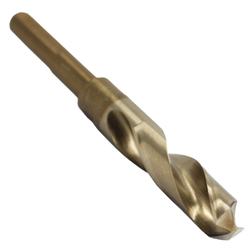
1/2" Cobalt Reduced Shank Drills
-
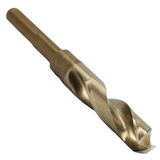 1/2" Cobalt Reduced Shank Drills, Qualtech
-
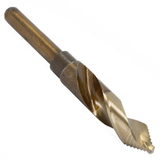 1/2" Stepped Point Cobalt Reduced Shank Drills
-
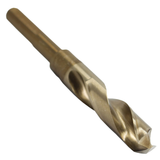 1/2" Cobalt Reduced Shank Drills, Drill America
-
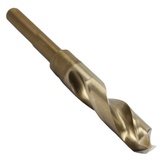 1/2" Cobalt Reduced Shank Drills, Metric
1/2" Cobalt Reduced Shank Drill Bits for Stainless Steel and Hard Metals
Shop 1/2" cobalt reduced shank drill bits from Qualtech and Drill America for drilling stainless steel, alloy steel, titanium, Inconel, and other demanding metalworking materials. These industrial drill bits combine heat-resistant cobalt high-speed steel with a reduced shank that allows larger cutting diameters to fit compatible 1/2" drill chucks.
Our selection includes Qualtech M35 5% cobalt drills, Drill America M42 8% cobalt drills, stepped-point cobalt drills, and metric cobalt reduced shank drills. Choose conventional 135-degree split-point geometry for dependable general-purpose metal drilling or stepped-point geometry for improved hole starting and controlled hole enlargement.
Explore the four categories below to find the appropriate cobalt grade, point design, cutting diameter, and shank configuration for your application.
Featured Cobalt Reduced Shank Drill Bit Set

Qualtech 5 Piece M35 Cobalt Reduced Shank Drill Bit Set – 9/16" to 1"
The Qualtech POUDWDCO five-piece cobalt reduced shank drill set provides five popular larger cutting diameters in a convenient plastic case pouch.
Manufactured from M35 high-speed steel containing 5% cobalt, these drills offer excellent heat resistance for drilling stainless steel, alloy steel, and other tough metals. Their 135-degree split points help reduce walking and improve starting accuracy.
Each drill features a 1/2" reduced round shank, allowing cutting diameters larger than 1/2" to fit compatible 1/2" drill chucks.
Set includes:
- 9/16" cobalt reduced shank drill
- 5/8" cobalt reduced shank drill
- 3/4" cobalt reduced shank drill
- 7/8" cobalt reduced shank drill
- 1" cobalt reduced shank drill
Specifications: M35 5% cobalt, 135° split point, 1/2" round shank, 3" flute length, and 6" overall length.
Shop the 5 Piece Qualtech Cobalt SetShop 1/2" Cobalt Reduced Shank Drills by Type
Choose from four cobalt reduced shank drill categories based on cobalt grade, point geometry, and size requirements.
Qualtech M35 Cobalt Reduced Shank Drills – 5% Cobalt
Qualtech cobalt reduced shank drills are manufactured from M35 high-speed steel containing 5% cobalt. They are designed for drilling tough, high-tensile-strength metals including stainless steel, alloy steel, titanium, and Inconel.
The conventional 135-degree split point provides accurate hole starts and reduces walking compared with standard 118-degree drill points. The 1/2" reduced shank allows larger cutting diameters to fit compatible drill chucks.
Qualtech M35 cobalt drills are an excellent choice for general-purpose industrial metalworking, fabrication, maintenance, and machine shop applications.
Drill America M42 Cobalt Reduced Shank Drills – 8% Cobalt
Drill America's conventional cobalt reduced shank drills are manufactured from M42 high-speed steel containing 8% cobalt. M42 offers greater hot hardness than M35, making it a strong choice for demanding drilling conditions involving elevated cutting temperatures.
These drills feature a 135-degree split point for improved centering, reduced walking, and efficient penetration into tough metals.
Choose Drill America M42 cobalt drills for demanding industrial applications where heat resistance, cutting-edge durability, and consistent performance are priorities.
Drill America Stepped-Point Cobalt Reduced Shank Drills
Drill America stepped-point cobalt drills feature specialized cutting geometry designed to start easier, reduce walking, and provide controlled cutting when drilling new holes or enlarging existing holes.
The stepped cutting geometry engages the material progressively, helping improve centering and reduce the thrust required during drilling. These drills also incorporate a 135-degree split-point tip.
Selected stepped-point reduced shank drills feature three-flat shanks for improved chuck grip, along with a gold oxide surface treatment.
They are particularly useful for stainless steel fabrication, industrial maintenance, metalworking, and applications requiring accurate hole enlargement.
Metric Cobalt Reduced Shank Drill Bits
Metric cobalt reduced shank drills provide metric cutting diameters for industrial applications requiring millimeter-sized holes rather than fractional inch sizes.
These drills are useful for metric fasteners, fabrication drawings, machine components, and equipment manufactured to metric specifications.
Check each product's cobalt grade, point design, cutting diameter, and shank dimensions before ordering.
Qualtech vs. Drill America Cobalt Reduced Shank Drill Bits
The main difference between the conventional Qualtech and Drill America cobalt reduced shank lines is the grade of cobalt high-speed steel used.
Qualtech uses M35 high-speed steel containing 5% cobalt, while Drill America's conventional M42 line contains 8% cobalt. Both offer improved heat resistance compared with standard M2 high-speed steel, but they are intended for somewhat different drilling demands.
Qualtech M35 – Versatile 5% Cobalt
M35 cobalt is a practical choice for regular drilling in stainless steel, alloy steel, and other tough metals. It provides increased hot hardness and wear resistance compared with conventional M2 high-speed steel.
For general fabrication, maintenance, and machine shop work, Qualtech M35 offers a useful balance of performance and value.
Drill America M42 – Premium 8% Cobalt
M42 cobalt contains 8% cobalt and is known for high hot hardness and wear resistance. This can be advantageous when drilling difficult materials or operating under demanding cutting conditions.
Drill America M42 reduced shank drills are a strong choice for professional metalworking applications where maintaining cutting-edge performance at elevated temperatures is especially important.
Does More Cobalt Always Mean a Better Drill?
Not necessarily. M42 generally offers greater hot hardness than M35, but the best drill depends on the workpiece material, cutting speed, feed rate, tool rigidity, and required hole size.
For routine stainless steel drilling, M35 may be entirely suitable. For demanding applications with greater heat and wear, M42 may offer advantages.
M35 vs. M42 Cobalt Reduced Shank Drill Comparison
| Feature | Qualtech M35 | Drill America M42 |
|---|---|---|
| Cobalt Content | 5% | 8% |
| Steel Grade | M35 cobalt HSS | M42 cobalt HSS |
| Point Geometry | 135° split point | 135° split point |
| Heat Resistance | High | Higher hot hardness |
| Typical Applications | General industrial metal drilling | More demanding metal drilling |
| Reduced Shank | 1/2" | 1/2" |
| Primary Advantage | Performance and value | Greater hot hardness and wear resistance |
These comparisons apply to the conventional M35 Qualtech and M42 Drill America reduced shank lines. Stepped-point and metric models should be evaluated according to their individual specifications.
135° Split Point vs. Stepped-Point Cobalt Drill Bits
In addition to cobalt grade, drill point geometry plays an important role in cutting performance.
Our cobalt reduced shank selection includes conventional 135-degree split-point drills and specialized Drill America stepped-point drills. Both are designed for metal drilling, but the way they engage the workpiece is different.
Conventional 135° Split Point
A conventional 135-degree split point uses a modified cutting tip designed to improve self-centering and reduce the thrust needed to begin drilling.
Compared with many traditional 118-degree drill points, the 135-degree split point helps reduce walking on metal surfaces and improves starting accuracy.
This design is widely used for drilling stainless steel, alloy steel, cast iron, and other machinable metals.
Drill America Stepped-Point Design
A stepped-point cobalt drill incorporates a specially shaped tip that engages the material progressively instead of cutting immediately at the full drill diameter.
The geometry is designed to start more easily, reduce walking, lower cutting thrust, and improve control during hole enlargement.
Drill America's stepped-point cobalt drills also feature a 135-degree split-point tip, combining self-centering geometry with the advantages of the stepped cutting design.
When Is a Stepped Point Useful?
Stepped-point drills are particularly useful when enlarging existing holes, drilling larger diameters, or working with difficult metals where controlled cutting and accurate starting are important.
They can reduce the need for a separate pilot drill in many applications, although drilling conditions and equipment limitations still determine the best procedure.
Stepped Point Is Not the Same as a Step Drill
A stepped-point twist drill has a specialized cutting tip but produces one final hole diameter.
A conventional step drill has multiple cutting diameters along a conical body and is commonly used for drilling or enlarging holes in sheet material.
Standard Split Point vs. Stepped Point Comparison Chart
| Feature | 135° Split Point | Stepped Point |
|---|---|---|
| Tip Geometry | Conventional split-point cutting tip | Progressive stepped cutting tip |
| Starting Accuracy | Self-centering design | Enhanced centering geometry |
| Hole Enlargement | Suitable with proper technique | Designed for controlled enlargement |
| Pilot Drilling | Depends on hole size and conditions | Can reduce pilot drilling requirements |
| Common Applications | General metalworking | Demanding drilling and hole enlargement |
What Is a 1/2" Reduced Shank Cobalt Drill Bit?
A reduced shank drill bit has a cutting diameter larger than its shank diameter. For example, a 3/4" cobalt reduced shank drill can have a 1/2" shank, allowing it to fit a compatible 1/2" drill chuck.
This design makes larger cutting diameters accessible without requiring a drill chuck that matches the full cutting diameter.
Larger Holes with a 1/2" Chuck
Reduced shank drills expand the range of cutting diameters that can be held in a conventional drill chuck. The drilling machine must still have sufficient power, torque, and rigidity for the selected diameter.
Round Shanks
Conventional reduced shank cobalt drills commonly use round shanks that fit compatible keyed or keyless drill chucks.
Three-Flat Shanks
Selected Drill America stepped-point cobalt drills feature three-flat shanks. The flats provide additional gripping surfaces that help reduce shank slipping under heavy drilling loads.
Common Flute and Overall Length
Many Drill America and Qualtech 1/2" reduced shank drills feature a 3" flute length and 6" overall length, helping reduce adjustments when changing between drill diameters.
Cutting Diameter vs. Shank Diameter
The cutting diameter determines the hole size. The shank diameter determines the required chuck capacity. These measurements are not interchangeable.
Why Choose Cobalt Reduced Shank Drills Instead of Standard HSS?
Cobalt high-speed steel contains alloying elements that improve its ability to retain cutting hardness at elevated temperatures.
Compared with conventional M2 high-speed steel, cobalt drills are particularly useful when cutting tough, heat-generating materials.
Higher Hot Hardness
Cobalt high-speed steel maintains cutting hardness at higher temperatures, helping the drill retain its cutting edge under demanding conditions.
Improved Wear Resistance
Cobalt drills are designed to resist wear when drilling tough metals such as stainless steel, titanium, and high-strength alloys.
Better Performance in Stainless Steel
Stainless steel can generate substantial heat and work-harden during drilling. Properly selected cobalt drills, used with appropriate speeds, feeds, and cutting fluid, are well suited to many stainless steel applications.
Industrial Metalworking Applications
Cobalt reduced shank drills are commonly used in fabrication shops, industrial maintenance, machine shops, automotive repair, and manufacturing.
Not a Surface Coating
The cobalt is alloyed into the high-speed steel itself rather than applied only as a surface coating. The cutting properties are not dependent solely on a thin coating remaining intact.
What Materials Can Cobalt Reduced Shank Drill Bits Cut?
Stainless Steel
Cobalt drills are frequently selected for stainless steel because of their heat resistance and ability to maintain cutting performance in tough materials.
Alloy Steel
Many alloy steels can be drilled using appropriately selected M35 or M42 cobalt bits with suitable speeds, feeds, and cutting fluid.
Titanium
Cobalt drills are used for selected titanium drilling applications. Titanium requires careful control of cutting speed, feed pressure, heat, and lubrication.
Inconel and High-Temperature Alloys
High-strength, heat-resistant alloys can be difficult to machine. Cobalt high-speed steel is used in selected applications, although material grade and machining conditions must be evaluated carefully.
Cast Iron
Cobalt drills can be used for drilling suitable cast iron materials. Proper tool selection and chip control depend on the type of cast iron.
Carbon Steel
Cobalt reduced shank drills are suitable for many carbon steel applications, particularly where larger holes or demanding drilling conditions are involved.
Aluminum and Brass
Selected cobalt drills can also cut aluminum and brass, although standard HSS drills may be sufficient for many applications. The appropriate cutting geometry and operating conditions remain important.
Hardened Steel
Some hardened materials may be machinable with suitable cobalt drills, but very hard or through-hardened steels may require carbide or specialized cutting tools. Verify material hardness before selecting the drill.
Common Applications for 1/2" Cobalt Reduced Shank Drills
Stainless Steel Fabrication
Drilling larger holes in stainless steel plate, brackets, frames, and fabricated metal components.
Industrial Maintenance
Preparing and enlarging holes in machinery, equipment, mounting plates, and replacement components.
Machine Shops
Using compatible drill presses and machine tools for larger-diameter metal drilling applications.
Automotive and Equipment Repair
Drilling or enlarging holes in compatible metal components during repair, modification, and maintenance work.
Metal Fabrication
Creating holes in steel plate, brackets, structural components where specified, and other fabricated metal parts.
Hole Enlargement
Using appropriately designed cobalt drills, particularly stepped-point models, to enlarge existing holes with controlled cutting action.
How to Choose the Right Cobalt Reduced Shank Drill Bit
1. Choose M35 or M42 Cobalt
Consider Qualtech M35 5% cobalt for general industrial drilling or Drill America M42 8% cobalt for more demanding applications where additional hot hardness is beneficial.
2. Select Split Point or Stepped Point
Choose a conventional 135-degree split point for versatile metal drilling. Consider stepped-point geometry for controlled hole enlargement, improved starting, and demanding applications.
3. Determine the Required Cutting Diameter
Select the correct fractional or metric diameter for the hole. The cutting diameter is independent of the 1/2" reduced shank size.
4. Confirm Chuck Compatibility
Verify that your drill chuck can securely hold the 1/2" shank and that the machine is rated for the cutting diameter and material.
5. Consider the Workpiece Material
Stainless steel, titanium, Inconel, and alloy steel may require different cutting speeds, feeds, and coolant arrangements.
6. Check Drilling Depth
Confirm the flute length and overall length. A 6" overall-length drill with a 3" flute length does not provide 6" of usable drilling depth.
7. Consider a Multi-Size Set
For commonly used large fractional sizes, the Qualtech five-piece cobalt reduced shank set includes five diameters from 9/16" through 1".
Tips for Drilling Stainless Steel and Hard Metals with Cobalt Bits
Use the Correct Cutting Speed
Larger drill diameters generally require lower spindle speeds. Select RPM based on the cutting diameter, cobalt grade, workpiece material, and tool manufacturer's recommendations.
Maintain a Consistent Feed
Use sufficient feed pressure to maintain a cutting action without forcing the drill. Excessive rubbing can generate heat and contribute to work hardening in stainless steel.
Use Appropriate Cutting Fluid
Suitable cutting oil or coolant can help reduce friction, control heat, and improve cutting performance in many steel and stainless steel applications.
Secure the Workpiece
Clamp the material securely. Larger reduced shank drills can generate substantial torque, particularly when breaking through the workpiece.
Use Rigid Drilling Equipment
A rigid drill press or suitable machine tool can improve hole accuracy and reduce vibration. Portable drilling equipment must have sufficient torque and proper handling provisions.
Avoid Excessive Heat
Overheating can damage the cutting edge even on cobalt drills. Use proper speeds, feeds, lubrication, and chip evacuation.
Consider Stepped-Point Geometry
For applications involving existing holes or difficult hole starts, stepped-point cobalt drills may offer improved centering and controlled cutting.
Inspect the Drill Before Use
Check the cutting edges and shank for damage, excessive wear, or deformation. Replace damaged tools before drilling.
Frequently Asked Questions About Cobalt Reduced Shank Drill Bits
What is a cobalt reduced shank drill bit?
It is a cobalt high-speed steel drill bit with a shank smaller than its cutting diameter, allowing larger holes to be drilled using a compatible smaller-capacity chuck.
What does 1/2" reduced shank mean?
It means the drill has a nominal 1/2" shank even though the cutting diameter may be larger than 1/2".
What is the difference between Qualtech and Drill America cobalt drills?
Qualtech's conventional cobalt reduced shank drills use M35 steel with 5% cobalt, while Drill America's conventional line uses M42 steel with 8% cobalt.
What is M35 cobalt?
M35 is a cobalt-alloy high-speed steel containing approximately 5% cobalt, providing improved hot hardness and wear resistance compared with conventional M2 HSS.
What is M42 cobalt?
M42 is a cobalt-alloy high-speed steel containing approximately 8% cobalt and offering high hot hardness for demanding metal drilling applications.
Is M42 better than M35?
M42 generally offers greater hot hardness and wear resistance, but M35 may be more than sufficient for many general-purpose stainless steel and alloy steel drilling applications.
Can cobalt reduced shank drills cut stainless steel?
Yes. Cobalt drills are commonly used for stainless steel because of their heat resistance and ability to maintain cutting performance in tough materials.
Can cobalt drills cut titanium?
Yes, selected cobalt drills can machine titanium when appropriate speeds, feeds, cutting fluids, and equipment are used.
Can cobalt drills cut Inconel?
Selected cobalt drills can be used for some Inconel applications, although these alloys are difficult to machine and require careful cutting conditions.
What is a 135-degree split point?
A 135-degree split point is a drill tip geometry designed to improve self-centering, reduce walking, and lower starting thrust compared with many conventional 118-degree points.
What is a stepped-point cobalt drill?
It is a cobalt twist drill with specialized stepped cutting geometry designed for easier starting, reduced walking, and controlled drilling or hole enlargement.
Do stepped-point cobalt drills have a 135-degree tip?
Drill America's stepped-point cobalt reduced shank drills feature a 135-degree split-point tip combined with stepped cutting geometry.
Is a stepped-point drill the same as a step drill?
No. A stepped-point twist drill produces one final hole diameter, while a conventional step drill has multiple cutting diameters along its body.
Are stepped-point drills better for enlarging holes?
Stepped-point drills are designed to provide improved control when enlarging existing holes, although results depend on the material and drilling setup.
Do cobalt drills require a pilot hole?
Not always. A 135-degree split point helps reduce walking, while stepped-point designs may further reduce the need for pilot drilling in suitable applications.
What is the advantage of a three-flat shank?
A three-flat shank provides additional gripping surfaces to help reduce slipping inside a compatible drill chuck.
Can I drill a 1-inch hole with a 1/2-inch chuck?
Yes, using a suitable 1-inch cutting diameter drill with a 1/2-inch reduced shank, provided the drill machine has adequate power, torque, and capacity.
What sizes are included in the Qualtech five-piece set?
The set includes 9/16", 5/8", 3/4", 7/8", and 1" cobalt reduced shank drills.
What are the dimensions of the featured Qualtech drills?
Each drill has a 1/2" reduced shank, 3" flute length, and 6" overall length.
Can cobalt drill bits be sharpened?
Yes. Cobalt high-speed steel drills can generally be resharpened using suitable grinding equipment and the correct point geometry.
Should I use cutting oil with cobalt drills?
Cutting oil or coolant is recommended for many steel and stainless steel applications to help control heat and improve tool life.
Can cobalt reduced shank drills be used in cordless drills?
They may be used in compatible portable drills with adequate torque and chuck capacity, but larger diameters can create substantial cutting forces and may be better suited to rigid drilling equipment.
Are metric cobalt reduced shank drills available?
Yes. Metric cobalt reduced shank drills are available for applications requiring metric cutting diameters.
How do I choose between M35, M42, and stepped-point cobalt drills?
Choose M35 for versatile industrial drilling, consider M42 for greater hot hardness, and select stepped-point geometry when improved starting or controlled hole enlargement is important.
Shop Cobalt Reduced Shank Drill Bits and Related Categories
Qualtech M35 5% Cobalt Reduced Shank Drills
Drill America M42 8% Cobalt Reduced Shank Drills
Drill America Stepped-Point Cobalt Reduced Shank Drills
Metric Cobalt Reduced Shank Drills
Qualtech 5 Piece Cobalt Reduced Shank Drill Bit Set
All 1/2" Reduced Shank Drill Bits
Cobalt Jobber Length Drill Bits
Explore our Qualtech and Drill America cobalt reduced shank drill bits to find the right M35 or M42 cobalt grade, split-point or stepped-point geometry, and fractional or metric diameter for your metal drilling application.
Learn More About Cobalt Drill Bits
Watch our Drill America videos to learn about cobalt drill bit construction, drilling performance, and the advantages of stepped-point cutting geometry.
Cobalt Drill Bits from Drill America
Drill America cobalt drill bits are designed for drilling tough, high-tensile-strength materials including stainless steel, titanium, and Inconel.
These industrial cobalt drills offer high hot hardness and feature 135-degree split points for improved self-centering and reduced starting thrust.
For larger hole diameters, Drill America M42 cobalt reduced shank drills provide the advantages of 8% cobalt high-speed steel with 1/2" reduced shanks.
Drill America Stepped-Point Cobalt Drill Bits
Drill America's stepped-point cobalt drills are designed to start easier, drill efficiently, reduce walking, and provide controlled cutting when creating or enlarging holes.
The stepped cutting geometry and 135-degree split-point tip help improve self-centering and reduce thrust, making these drills useful for stainless steel fabrication and demanding metalworking applications.