
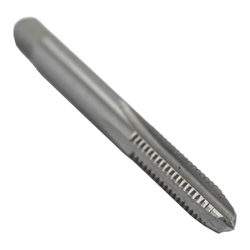
Carbon Steel Hand Taps
Carbon Steel Hand Taps for Rethreading and Thread Repair
Shop carbon steel hand taps for cleaning, restoring, and repairing existing internal threads. These economical taps are commonly used for maintenance and repair applications, including removing minor thread damage, corrosion, and debris from previously threaded holes.
Carbon steel hand taps are particularly useful for occasional rethreading work in suitable materials. While they can also cut new threads in certain applications, we generally recommend High-Speed Steel (HSS) Hand Taps for cutting new threads because of their greater durability and wear resistance.
What Are Carbon Steel Hand Taps Used For?
Carbon steel hand taps are commonly used to restore existing internal threads that have become dirty, corroded, or slightly damaged. They can help remove small burrs and obstructions, allowing a correctly sized bolt or fastener to engage more smoothly.
Cleaning Existing Threads
Remove accumulated debris, light corrosion, and minor obstructions from previously threaded holes during maintenance and repair work.
Restoring Minor Thread Damage
Carefully rethread holes with minor burrs or damaged thread edges to help restore proper fastener engagement. Severely stripped or damaged threads may require a thread insert or another repair method.
Machinery and Equipment Maintenance
Carbon steel taps provide an economical option for occasional thread restoration in machinery, equipment, fixtures, and general repair applications.
Carbon Steel vs. HSS Hand Taps: Which Should You Use?
Carbon Steel Hand Taps: Rethreading and Repair
Carbon steel taps are a practical choice for occasional maintenance, cleaning up existing threads, and correcting minor thread damage in suitable materials. They are generally less expensive than high-speed steel taps but offer lower heat and wear resistance.
High-Speed Steel Hand Taps: Cutting New Threads
For drilling and tapping a new hole, we recommend high-speed steel (HSS) hand taps. HSS provides greater durability, heat resistance, and cutting performance for general metalworking, fabrication, and more demanding threading applications.
Explore our HSS Machine and Fractional Hand Taps or HSS Metric Hand Taps for new threading applications.
Our recommendation: Choose carbon steel for occasional rethreading and minor thread restoration. Choose HSS when cutting new threads or working in more demanding materials.
Choosing the Correct Carbon Steel Hand Tap
Fractional Carbon Steel Hand Taps
Fractional hand taps are designed for inch-based threads identified by nominal diameter and threads per inch (TPI). Common thread specifications include UNC coarse and UNF fine. Match the tap to the exact existing thread before attempting a repair.
Metric Carbon Steel Hand Taps
Metric hand taps are used to restore metric internal threads, identified by diameter and pitch, such as M6 x 1.0 or M8 x 1.25. Confirm both measurements before selecting a tap.
Not sure which thread size you have? Consult our Tap and Drill Chart for common fractional and metric thread specifications.
Understanding Taper, Plug, and Bottoming Taps
Taper Taps
Taper taps have a longer lead chamfer that helps guide the tap into the hole. Their gradual cutting action can be helpful when carefully starting a tap in an existing threaded opening.
Plug Taps
Plug taps have a moderate chamfer and are commonly used for general-purpose threading and rethreading when sufficient clearance is available.
Bottoming Taps
Bottoming taps have a short chamfer and are useful when threads must extend close to the bottom of a blind hole. They require careful alignment and are generally not the first choice for starting a thread repair.
Tap styles and availability vary by product. Select the appropriate style based on the existing thread condition and hole depth.
Tips for Rethreading and Restoring Damaged Threads
1. Identify the Original Thread Size
Determine the correct diameter and thread pitch before beginning. Using the wrong tap can permanently damage existing threads.
2. Inspect and Clean the Hole
Remove loose debris and inspect the threads for corrosion, burrs, or damage. For simple cleaning, a dedicated thread chaser may be preferable because a cutting tap can remove additional material.
3. Carefully Align the Tap
Use an appropriate tap wrench and carefully engage the existing thread path. Avoid cross-threading or forcing the tap if resistance is excessive.
4. Use Suitable Lubrication
Apply cutting fluid or lubricant appropriate for the material when needed. Advance the tap slowly and periodically reverse to help clear chips if material is being removed.
5. Check the Finished Threads
Remove chips and debris, then verify that the intended fastener engages smoothly. If threads are severely stripped or cannot hold the fastener securely, a more extensive repair may be required.
For help selecting a wrench, visit our Tap Wrench Chart.
Frequently Asked Questions About Carbon Steel Hand Taps
Are carbon steel hand taps good for rethreading?
Yes. Carbon steel hand taps are commonly used for occasional rethreading, cleaning up minor thread damage, and restoring existing internal threads in suitable materials.
Can carbon steel taps cut new threads?
Carbon steel taps can cut new threads in certain suitable materials, but we generally recommend HSS hand taps for new threading applications because they offer better durability and wear resistance.
What is the difference between a rethreading tap and a regular tap?
A rethreading tool is intended to restore or clean existing threads. A conventional cutting tap is designed to cut threads and may remove additional material during repair. Carbon steel hand taps are often used for light rethreading work, but dedicated thread chasers may be preferable when material removal should be minimized.
Can a carbon steel tap repair completely stripped threads?
Not usually. Carbon steel taps can help with minor damage, but severely stripped threads may require a thread insert, an oversized thread repair, or another suitable repair method.
How do I choose between fractional and metric carbon steel taps?
Match the existing thread system. Fractional taps use inch-based diameters and threads per inch, while metric taps use metric diameters and pitch measured in millimeters. They are not interchangeable.
Can I use carbon steel taps on stainless steel?
For stainless steel and other demanding materials, we generally recommend HSS taps specifically suited to the workpiece material. Ordinary carbon steel taps are more appropriate for lighter-duty work in compatible materials.
Learn More About Taps and Thread Cutting
Watch our Drill America video to learn more about taps and threading tools. For cutting new threads, explore our complete selection of Hand Taps, including high-speed steel options.